
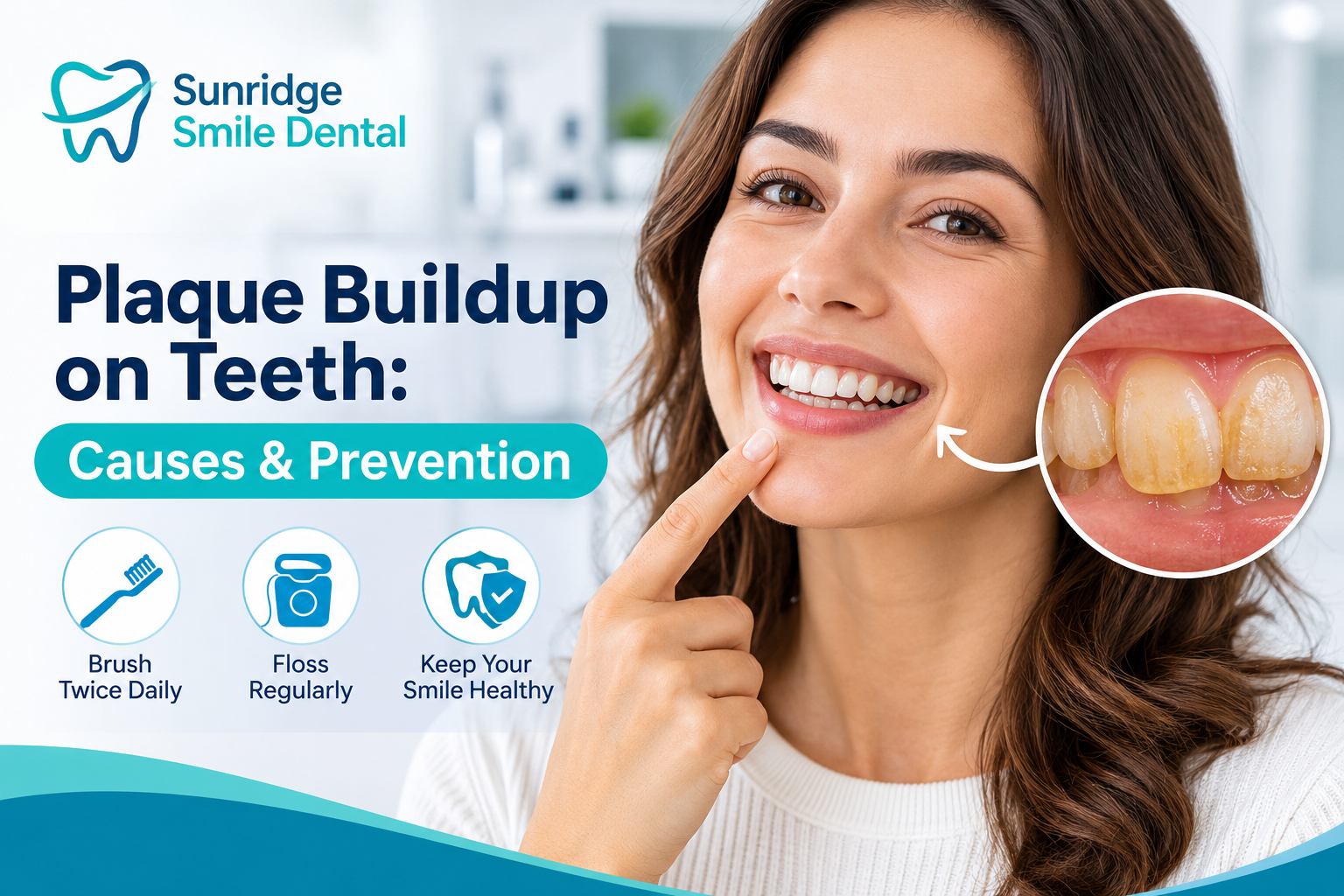
Have you ever noticed a sticky layer on your teeth, yellow deposits near your gums or a rough feeling even after brushing? Understanding how does plaque buildup on teeth is important for maintaining healthy teeth and gums. Dental plaque is a sticky, colourless film of bacteria that constantly forms on tooth surfaces. When plaque is not removed through regular brushing and flossing, it can harden into tartar (also known as dental calculus), increasing the risk of gum inflammation, cavities and other oral health problems.
The good news is that plaque buildup can be controlled with proper oral hygiene, fluoride toothpaste, daily flossing and regular professional dental cleanings. Knowing how to avoid plaque buildup and how to prevent tartar buildup can help protect your smile and reduce the risk of future dental problems.
At Sunridge Smile Dental, we help individuals and families in Sunridge and Northeast Calgary maintain healthier smiles through preventive dental care. In this guide, we explain what causes plaque buildup on teeth, how to get rid of plaque buildup at home, how to remove hardened tartar safely and when to consider professional dental cleaning.
What Is Dental Plaque?
Dental plaque is a soft, sticky film that forms on your teeth every day. It contains bacteria that feed on sugars and starches from the food and drinks you consume. As these bacteria grow, they create acids that can harm your tooth enamel.
Plaque can collect on the front and back of your teeth, along the gumline and between teeth. Although it may be hard to see, you can often feel it with your tongue.
If you do not remove plaque each day, it can lead to tooth decay, bad breath and gum problems. Over time, plaque can also harden into tartar, which is much harder to remove.
What Causes Plaque Buildup on Teeth?
Plaque forms naturally in the mouth. However, some daily habits can cause it to build up faster.
Common causes include:
- Poor brushing habits: Brushing too quickly or missing certain areas can leave plaque behind.
- Not flossing daily: Food and bacteria can collect between teeth where a toothbrush cannot reach.
- Eating sugary foods: Candy, cookies, cakes and other sweet foods give bacteria more sugar to feed on.
- Drinking sugary drinks: Soft drinks, sweetened coffee and juice can add to plaque buildup.
- Dry mouth: A lack of saliva can make it harder for your mouth to wash away food particles and bacteria.
- Skipping dental visits: Without regular checkups and cleanings, plaque and tartar may go unnoticed.
Fortunately, small changes to your daily routine can help reduce plaque and protect your teeth.
What Is the Difference Between Plaque and Tartar?
Plaque and tartar are connected, but they are not the same.
Plaque is a soft film of bacteria that forms on teeth. You can remove it at home by brushing twice a day and flossing daily.
Tartar, also called dental calculus, forms when plaque stays on your teeth and hardens. It often appears as a yellow or brown deposit near the gumline. Unlike soft plaque, tartar cannot be safely removed with a regular toothbrush.
As a result, professional dental cleaning is needed to remove tartar. Removing it early can also help lower the risk of gum irritation and other dental problems.
How to Avoid Plaque Buildup on Teeth
A good oral care routine is one of the best ways to prevent plaque buildup. Follow these simple steps every day:
1. Brush Your Teeth Twice a Day
Brush your teeth for two minutes in the morning and before bed. Use a soft-bristled toothbrush and fluoride toothpaste. Also, clean the front, back and chewing surfaces of every tooth.
Remember to brush gently along the gumline. Brushing too hard can hurt your gums and wear down your enamel.
2. Floss Every Day
A toothbrush cannot reach every space between your teeth. That is why daily flossing is important. It helps remove food particles and plaque from areas that brushing may miss.
If regular floss is difficult to use, try floss picks or an interdental brush. These tools can make cleaning between your teeth easier.
3. Choose the Right Toothpaste
Fluoride toothpaste helps protect your enamel and lower the risk of cavities. Some toothpastes also contain ingredients that help control tartar buildup.
However, toothpaste cannot remove tartar that has already hardened on your teeth. For that reason, ask your dentist which toothpaste is right for your needs.
4. Use Mouthwash When Needed
Mouthwash can be a helpful addition to your daily routine. Some types help reduce bacteria, while others contain fluoride to protect your teeth.
Even so, mouthwash should not replace brushing or flossing. If you are looking for mouthwash for plaque buildup, ask your dental team to recommend a suitable option.
5. Limit Sugary Foods and Drinks
Bacteria in plaque use sugar to produce acids that can damage your teeth. Therefore, try to limit sweets, soft drinks and other sugary snacks.
Instead, choose water, fresh vegetables and other balanced food options. Drinking water throughout the day can also help wash away food particles.
How to Get Rid of Plaque Buildup at Home
If you notice a sticky feeling on your teeth, start with a careful daily cleaning routine. Brush twice a day, floss between your teeth and clean your tongue.
You can also use a fluoride mouthwash if your dentist recommends it. In addition, replace your toothbrush every three to four months, or sooner if the bristles become worn.
These steps can help remove soft plaque and reduce new buildup. However, they cannot remove hardened tartar.
Avoid scraping your teeth with sharp tools or trying strong home remedies to eliminate plaque buildup on teeth. Such methods can damage your enamel and gums. If plaque has hardened, a professional cleaning is the safer choice.
How to Prevent Tartar Buildup on Teeth
The best way to prevent tartar is to remove plaque before it has time to harden. Daily brushing and flossing are key parts of this process.
For better results, follow these habits:
- Brush twice daily with fluoride toothpaste.
- Floss once a day to clean between your teeth.
- Use a soft toothbrush and replace it regularly.
- Limit sugary snacks and drinks.
- Drink water throughout the day.
- Visit your dentist for regular checkups and cleanings.
These habits can also help prevent calculus buildup on teeth. However, some people may develop tartar more quickly than others. Your dentist can suggest a cleaning schedule based on your oral health.
How to Get Rid of Tartar Buildup on Teeth
Once plaque turns into tartar, brushing and flossing alone will not remove it. A dental professional must use special tools to clean the hardened deposits from your teeth.
During a professional cleaning, your dental team removes tartar from above and below the gumline where needed. They may also polish your teeth to remove surface stains and leave them feeling smooth.
Do not try to remove tartar at home with metal tools, baking soda or other rough products. These methods may damage your teeth and gums. Instead, book a dental cleaning for safe tartar removal.
If you are looking for dental cleaning in Sunridge and Northeast Calgary, Sunridge Smile Dental can help you maintain a clean and healthy smile.
What Causes Calcium Buildup on Teeth?
The term calcium buildup on teeth is often used to describe hard deposits near the gumline. These deposits are usually tartar, which forms when plaque collects minerals from saliva and hardens.
Tartar may look white, yellow or brown. It can also make your teeth feel rough and create a place where more plaque can collect.
Although good brushing and flossing habits can help prevent these deposits, hardened tartar needs professional removal.
When Should You Visit a Dentist?
Plaque buildup is common, but certain signs may mean you need a dental checkup. Pay attention to symptoms such as:
- Red, swollen or tender gums
- Bleeding when brushing or flossing
- Yellow or brown deposits near the gumline
- Bad breath that does not go away
- A rough feeling on your teeth
- Gum discomfort or changes in your gumline
These signs may point to tartar buildup or early gum disease. Therefore, do not wait for the problem to become painful before seeing your dentist.
You can also learn more about dental care through the Sunridge Smile Dental FAQs.
Keep Your Smile Healthy with Regular Dental Cleanings
Preventing plaque and tartar buildup starts with simple daily habits. Brush twice a day, floss every day, choose fluoride toothpaste and limit sugary foods. Most importantly, keep up with regular dental checkups and professional cleanings.
Although you can remove soft plaque at home, hardened tartar needs care from a dental professional. Regular visits can help find early signs of tooth decay and gum disease before they become bigger problems.
At Sunridge Smile Dental, we provide preventive dental care for individuals and families in Sunridge and Northeast Calgary. Our team can help you understand your oral health needs and choose the right care for your smile.
Book your next dental cleaning and take a simple step toward healthier teeth and gums.
Helpful Dental Resources
For more information about oral health, explore these trusted resources: