
Cosmetic Dentistry · Sunridge, Calgary
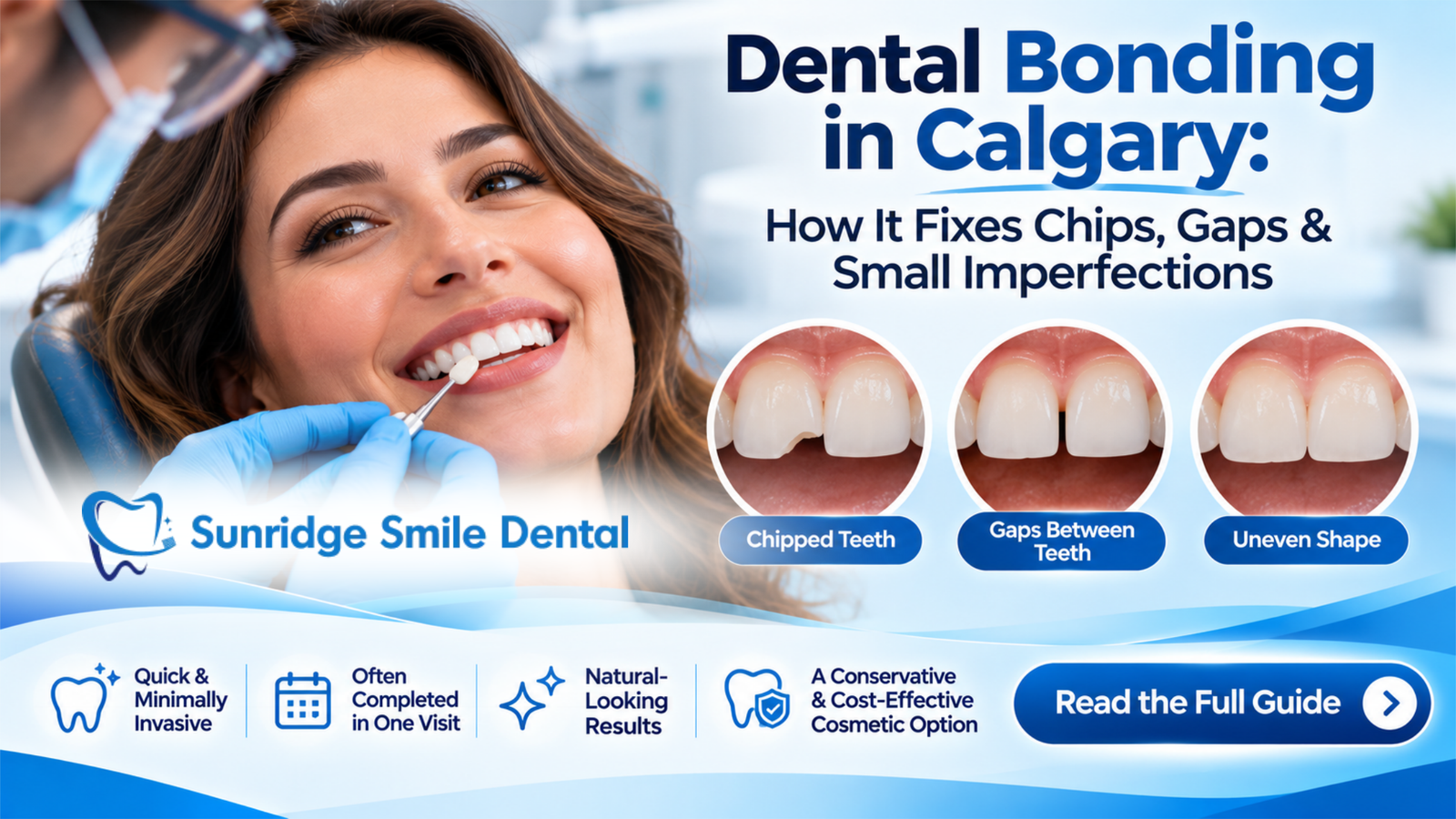
A tiny chip on a front tooth, an uneven edge or a small gap can make you more aware of your smile than you would like. Dental bonding is one option that may improve these minor concerns without the more involved process of some other cosmetic treatments. Here is how composite bonding works, what it can and cannot change, and what to consider before booking an appointment.
Ask About Dental BondingWhat is dental bonding and what can it fix?
Dental bonding is a treatment in which a dentist applies tooth-coloured composite resin to a tooth, shapes it to improve the tooth’s appearance or repair a minor defect, and hardens it with a special curing light. The material is then refined and polished so it blends with the surrounding tooth. Depending on the condition of the tooth, bonding may be used to repair a small chip, improve an uneven edge, close a minor gap, adjust the shape of a tooth or mask selected areas of discolouration.
Bonding is often considered a conservative cosmetic option because it may require little or no removal of healthy tooth structure. However, it is not suitable for every type of damage, bite problem or colour concern. A dental examination helps determine whether bonding is appropriate or whether another treatment would provide a stronger or more predictable result.
What dental problems can composite bonding improve?
Composite bonding can be useful when the change needed is relatively small and the tooth is otherwise healthy enough to support the restoration. The dentist works with the shape, shade and position of the tooth to create a natural-looking result.
1. Small chips and worn edges
A minor chip on a front tooth can catch your eye every time you look in the mirror. Bonding can add composite resin to the missing corner or edge, restoring a smoother outline. It may also be considered for slight wear that has made an edge look uneven. The cause of the chip or wear matters: a habit such as nail biting, clenching or grinding can put a new repair under repeated stress.
If a tooth is painful, loose, deeply cracked or has a large portion missing, do not assume cosmetic bonding is enough. The dentist needs to check for deeper damage, nerve involvement and changes to the bite. A more protective restoration or other treatment may be needed.
2. Small spaces between teeth
For selected patients, composite resin can be added to the sides of teeth to make a small gap less noticeable. This may be an option for a limited space between front teeth when the tooth proportions and bite allow it. Bonding changes the visible shape of the teeth; it does not move the roots or correct the underlying position of the teeth.
If spaces are larger, there are several gaps, or the teeth are crowded or rotated, orthodontic treatment may be a better way to address the underlying alignment. Your dentist can discuss whether bonding alone, orthodontics or a combination makes sense.
3. Uneven, short or irregular tooth shapes
Sometimes one tooth looks shorter, narrower or differently shaped than the teeth beside it. Carefully placed composite can add length or width in a limited area and soften an uneven outline. The dentist must consider how the upper and lower teeth meet when you bite. Adding too much material or placing it where the teeth contact heavily may increase the chance of chipping.
4. Selected discolouration or visible spots
Bonding may mask some localized stains or colour irregularities that do not respond as expected to whitening. It is important to identify the reason for the colour change first. Discolouration can be related to surface staining, decay, trauma, old dental work or changes inside the tooth. These causes do not all call for the same treatment.
Bonding material does not whiten in the same way as natural enamel. If you are considering professional teeth whitening as well, discuss the order of treatment with your dentist so the composite shade can be planned appropriately.
5. Minor cosmetic corrections after an examination
Bonding may also be used to refine small contour differences or repair selected areas of worn tooth structure. The decision depends on the tooth’s health, the size and location of the area, the forces placed on it and your expectations. A cosmetic improvement should not hide an untreated cavity, gum problem or structural crack.
How does a dental bonding procedure work?
Many straightforward bonding treatments can be completed in one appointment, although the time required depends on how many teeth are being treated and how detailed the reshaping needs to be. The process is planned around your oral health and the appearance you want to improve.
- Assessment and planning: Your dentist examines the tooth, checks your bite and discusses the result you would like. If there is decay, a crack or another health concern, that issue may need attention before cosmetic work.
- Shade selection: The dentist chooses a composite shade intended to blend with your natural teeth. Lighting, surrounding tooth colour and any planned whitening can influence this choice.
- Tooth preparation: The surface is cleaned and prepared so the bonding material can attach. Depending on the case, the dentist may use a conditioning gel and bonding agent. Many simple cases need little or no removal of healthy enamel, but preparation varies.
- Composite placement: The dentist applies the resin in layers and shapes it to rebuild the edge, contour or area being treated.
- Curing: A special dental light hardens the resin. Additional shaping may be carried out as needed.
- Finishing and polishing: The bonded area is smoothed and polished. The dentist checks how your teeth meet and makes adjustments so the restoration does not interfere with your bite.
Local anaesthetic is not always needed for a small cosmetic repair, but it may be used if the tooth is sensitive or the treatment requires it. Ask your dentist what to expect for your particular tooth rather than assuming every bonding appointment is identical.
Who may be a good candidate for dental bonding?
Bonding may be worth discussing if you have a small chip, a minor gap, an uneven tooth edge or a localized cosmetic concern and your teeth and gums are generally healthy. It can be attractive to people who want a relatively conservative change and understand that composite may need maintenance or repair over time.
Your dentist may recommend treating another issue first, or choosing a different option, if you have:
- Untreated tooth decay or active gum disease.
- A large fracture, extensive loss of tooth structure or a crack that needs further assessment.
- Heavy grinding or clenching that could repeatedly overload the bonded area.
- A deep bite or tooth contact that places excessive force on the proposed repair.
- Large gaps, significant crowding or alignment concerns that bonding cannot correct predictably.
- Extensive discolouration that would be difficult to mask with a thin layer of composite.
These factors do not automatically rule out bonding. They are reasons to assess the tooth and discuss risks, alternatives and any preparatory treatment. If you grind your teeth, a night guard may be recommended to help protect teeth and restorations.
Benefits and limitations of cosmetic dental bonding
Why patients consider bonding
- Conservative approach: many small repairs can be completed while preserving much of the natural tooth structure.
- Natural-looking shade: composite is available in different shades and can be shaped to blend with neighbouring teeth.
- Often completed efficiently: straightforward cases may be finished in one visit, without a separate dental laboratory stage.
- Versatile for small changes: the material can be added, shaped, polished and, in many cases, repaired if it chips.
- May cost less initially than some alternatives: the total fee depends on the number of teeth, complexity and clinic assessment.
What bonding cannot do
Composite resin is not as resistant to wear and staining as natural enamel or some ceramic restorations. It can chip, roughen or discolour over time, particularly if you bite hard objects, chew ice, use your front teeth to open packaging, smoke or consume frequent staining foods and drinks. Bonding may also be less suitable for extensive shape changes, major alignment concerns or teeth that need substantial structural protection.
There is no guaranteed lifespan for a bonded restoration. How long it lasts depends on its size and location, bite forces, oral habits, home care and regular dental review. Your dentist can explain what maintenance may be expected for your particular repair.
How to care for bonded teeth
Good home care helps protect both the bonded area and the natural tooth around it. Bonding does not make a tooth immune to cavities or gum disease, so keep up your usual preventive routine.
- Brush twice daily: use a soft-bristled toothbrush and fluoride toothpaste. Brush gently along the gumline and around the bonded surface.
- Clean between teeth daily: floss or use an interdental cleaner recommended by your dental team.
- Avoid biting hard objects: do not chew ice, pens, fingernails or hard candy, and avoid using bonded front teeth to tear or open packaging.
- Be mindful of staining: coffee, tea, red wine and tobacco can stain composite over time. Rinsing with water after strongly coloured drinks may help reduce residue.
- Wear a recommended night guard: if you clench or grind, follow your dentist’s advice about protecting the restoration while you sleep.
- Attend regular checkups: your dentist can check the margins, polish the surface if appropriate and identify small issues before they become more complicated.
If a bonded area feels rough, catches floss, changes shape or chips, arrange an assessment. Do not try to file, glue or repair it yourself. If the tooth becomes painful or sensitive, contact a dental professional to check whether the tooth or restoration needs attention.
Dental bonding vs. veneers, crowns and fillings
Bonding is one of several ways to improve or restore a tooth. The right choice depends on whether the main goal is cosmetic, protective or both.
| Treatment | How it is used | Key consideration |
|---|---|---|
| Composite bonding | Composite resin is applied directly to repair or reshape a limited area. | Often conservative, but can chip or stain and may need polishing or repair. |
| Porcelain veneer | A thin, custom-made ceramic facing covers the front surface of a tooth. | Can address broader cosmetic changes, but generally involves more planning and may require enamel preparation. |
| Dental crown | A restoration covers and protects much or all of the visible tooth. | May be considered when a tooth has more extensive damage or needs greater structural coverage. |
| Tooth-coloured filling | Composite or another restorative material repairs a cavity or damaged area. | Primarily restores tooth structure affected by decay or damage; design depends on location and size. |
| Orthodontic treatment | Braces or clear aligners move teeth into improved positions. | Addresses tooth alignment rather than simply changing the visible shape of a tooth. |
These treatments are not interchangeable in every situation. A small chip may be suitable for bonding, while a heavily damaged tooth may need a crown or another restorative approach. A gap caused by tooth position may be better addressed with orthodontics. Your dentist can explain the benefits and trade-offs of each option.
For more information, explore the clinic’s pages about tooth-coloured dental fillings, crowns and bridges, and comprehensive dental exams and X-rays.
How much does dental bonding cost in Calgary?
The cost of dental bonding in Calgary varies. Factors include the number of teeth being treated, the size of each repair, the amount of shaping required, the materials used and whether other dental care is needed first. A small repair to one chipped edge is different from reshaping several front teeth.
Before treatment, ask for an estimate that explains:
- Which teeth are included and what the planned changes are.
- Whether the fee includes assessment, preparation, bonding and polishing.
- Whether any decay, gum treatment or bite-related issue should be addressed first.
- What follow-up, polishing, repair or replacement might cost if needed later.
- Whether your dental insurance plan provides benefits for the proposed procedure.
Insurance coverage can depend on the reason for treatment, the plan’s wording and annual limits. A cosmetic procedure may be treated differently from a repair considered necessary to restore a damaged tooth. Confirm your benefits with your insurer and request a clinic estimate before proceeding. Avoid choosing a treatment based on a price alone; suitability and the long-term condition of the tooth matter too.
Dental bonding in Sunridge and Northeast Calgary
If you live in Sunridge or nearby communities such as Rundle, Whitehorn, Marlborough, Falconridge, Temple, Pineridge, Monterey Park, Castleridge, Abbeydale, Martindale, Coral Springs or Taradale, you can discuss cosmetic concerns with the team at Sunridge Smile Dental.
Whether you have a chipped front tooth, a small gap or an uneven edge, the first step is an examination. Your dentist can check the health of the tooth, assess your bite and explain whether composite bonding or another treatment is more appropriate. The goal is a result that looks natural while respecting the strength and health of your teeth.
Sunridge Smile Dental is located at #102, 3393 26 Ave NE, Calgary, AB T1Y 6L4. Call 403-999-9233 or use the online contact form to request an appointment.
Ready to discuss a small smile improvement?
Book an assessment to find out whether dental bonding is suitable for your chipped tooth, small gap or other cosmetic concern.
Frequently asked questions about dental bonding
What is dental bonding?
Dental bonding is a procedure in which tooth-coloured composite resin is applied to a tooth, shaped, hardened with a curing light and polished. It may improve minor chips, small gaps, uneven edges and selected cosmetic imperfections.
Can dental bonding fix a chipped front tooth?
Bonding can repair many small chips on front teeth. Larger fractures, pain, cracks or damage close to the tooth’s nerve need careful assessment and may require a different treatment.
Can composite bonding close gaps between teeth?
It may close small spaces by adding resin to the sides of selected teeth. Larger gaps or spaces caused by significant alignment issues may be better treated with orthodontics.
How long does dental bonding take?
Many straightforward cases can be completed in one appointment. The time depends on the number of teeth, the size of the repair, the amount of shaping and whether other treatment is needed first.
Does dental bonding hurt?
Small cosmetic bonding procedures are often comfortable and may not require local anaesthetic. However, sensitivity, the extent of preparation and the condition of the tooth vary. Your dentist can explain what to expect for your treatment.
How long does tooth bonding last?
There is no guaranteed lifespan. Bonding can chip or stain and may need polishing, repair or replacement. Its longevity depends on the restoration, bite, oral habits, home care and regular dental visits.
Does dental bonding stain?
Composite resin can pick up stains over time, particularly with frequent exposure to coffee, tea, red wine and tobacco. Good hygiene and regular dental care help maintain its appearance, but composite does not whiten like natural enamel.
Is bonding better than veneers?
Neither is automatically better. Bonding is often more conservative for small changes, while veneers may be considered for broader cosmetic changes. The right option depends on tooth condition, desired results, preparation, maintenance and budget.
Can dental bonding fix crooked teeth?
Bonding can sometimes make a minor shape irregularity less noticeable, but it does not move teeth or correct the underlying bite. Braces or clear aligners may be more appropriate for alignment concerns.
Where can I ask about dental bonding near Sunridge?
Sunridge Smile Dental is located at #102, 3393 26 Ave NE, Calgary, AB T1Y 6L4. Call 403-999-9233 or use the clinic’s contact page to request an assessment.