
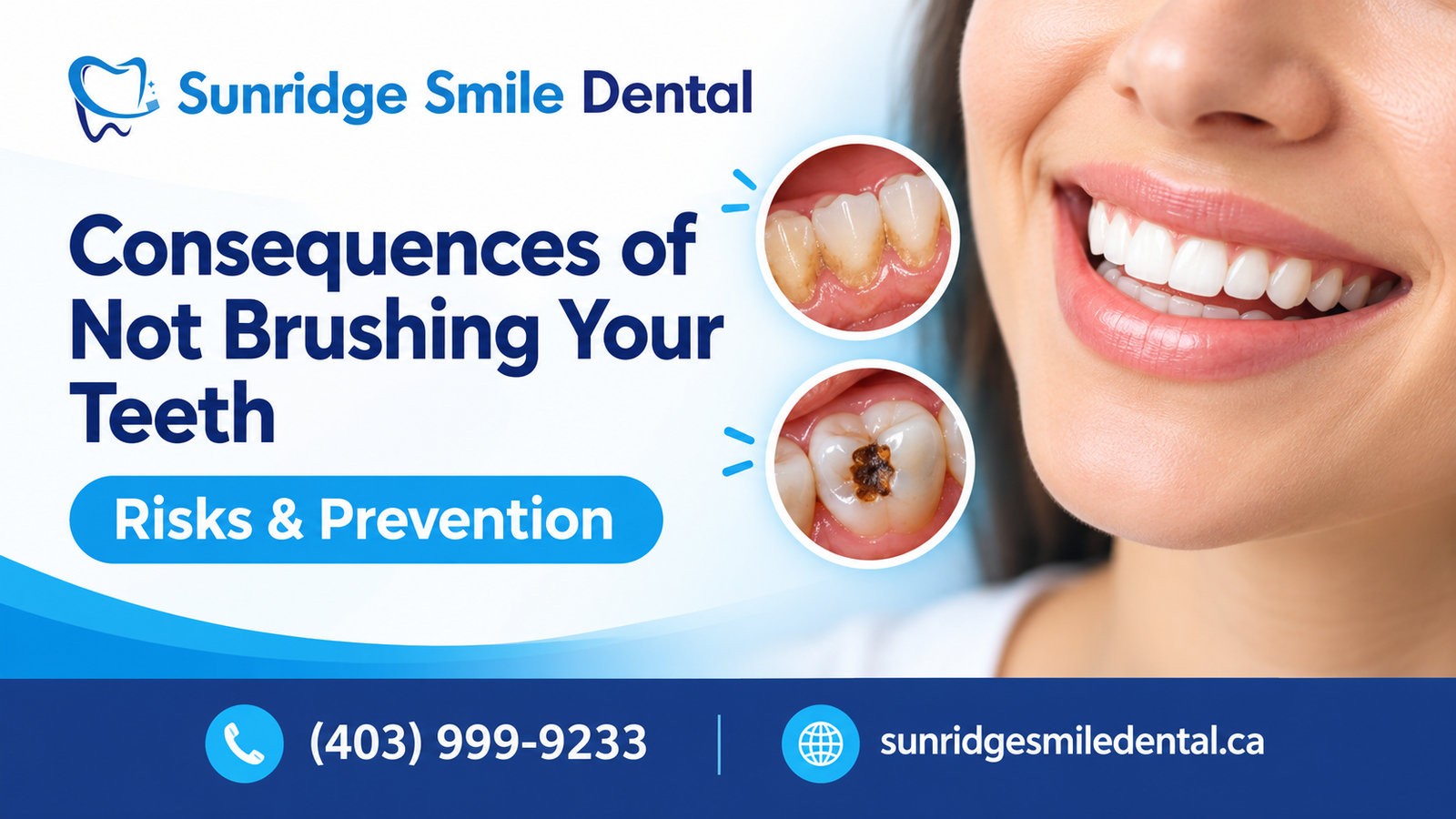
The consequences of not brushing your teeth can go far beyond an unhealthy smile. While occasionally skipping brushing may seem harmless, poor oral hygiene over time can lead to plaque and tartar buildup, cavities, toothaches, gum disease, persistent bad breath, and even tooth loss. Maintaining proper brushing habits is essential for protecting your teeth and gums and supporting long-term oral health.
Many people also have questions about everyday dental care: Can tartar be removed by brushing? Should you brush your teeth before or after breakfast? Can teeth shift with age? And can not brushing your teeth make you sick?
Understanding the consequences of not brushing your teeth can help you prevent dental problems before they become painful or expensive to treat.
At Sunridge Smile Dental, we believe that healthy smiles begin with good daily habits and preventive dental care. Here is what you should know about maintaining your oral health and protecting your smile.
1. What Are the Consequences of Not Brushing Your Teeth?
Brushing helps remove plaque, a sticky film containing bacteria that constantly forms on your teeth. When plaque is not removed regularly, it can contribute to several oral health problems.
Here are seven common consequences of not brushing teeth.
1. Tooth Decay and Cavities
One of the most common consequences of not brushing your teeth is tooth decay.
Bacteria in plaque feed on sugars from food and beverages, producing acids that weaken tooth enamel. Over time, this can create cavities that may cause sensitivity, discomfort and infection if left untreated.
Regular brushing with fluoride toothpaste helps protect enamel and reduce the risk of cavities.
2. Gum Disease
Plaque accumulation around the gumline can cause gingivitis, an early stage of gum disease.
Common symptoms include:
- Red or swollen gums
- Bleeding while brushing or flossing
- Tenderness around the teeth
- Persistent bad breath
Without treatment, gum disease can progress to periodontitis, which damages the tissues and bone supporting your teeth.
3. Persistent Bad Breath
Food particles and bacteria can accumulate in your mouth when you neglect brushing and flossing. This can cause unpleasant breath, also known as halitosis.
Brushing twice daily, flossing and cleaning your tongue can help maintain fresher breath.
4. Tartar Buildup
When plaque remains on your teeth, minerals in saliva can harden it into tartar, also called dental calculus.
Tartar commonly develops around the gumline and between teeth. Unlike soft plaque, hardened tartar cannot be removed through regular brushing.
5. Tooth Discolouration
Plaque, tartar and surface stains can make your teeth appear yellow or dull. Poor oral hygiene may also contribute to a less attractive smile.
Professional dental cleaning can help remove certain surface deposits and stains.
6. Tooth Sensitivity and Pain
Untreated cavities, gum recession and other dental problems may expose sensitive parts of your teeth.
You may experience discomfort when eating hot, cold, sweet or acidic foods.
7. Loose Teeth and Tooth Loss
Advanced gum disease can damage the bone and tissues supporting your teeth. In severe cases, teeth may become loose and eventually require extraction.
Remember: Missing a single brushing session does not automatically cause these problems. The greater concern is consistently neglecting your oral hygiene routine.
2. Can Not Brushing Your Teeth Make You Sick?
Yes, poor oral hygiene can affect more than your teeth and gums.
Your mouth contains different types of bacteria. When plaque accumulates, it can contribute to tooth decay, gum inflammation and oral infections.
Research has also found associations between poor oral health and broader health concerns, including cardiovascular disease and complications associated with diabetes. However, these associations do not mean that skipping brushing directly causes these conditions.
Maintaining good oral hygiene is an important part of supporting your overall health.
To protect your oral health:
- Brush twice daily with fluoride toothpaste.
- Floss every day.
- Drink water regularly.
- Reduce sugary foods and drinks.
- Visit your dentist for regular examinations and professional cleaning.
For more information, read the Government of Canada’s oral health recommendations.
3. Common Toothache Causes: Why Do Your Teeth Hurt?
Tooth pain can make eating, drinking and sleeping uncomfortable. Identifying the common causes of toothache can help you understand when professional dental attention is necessary.
Some of the most common toothache causes include:
Tooth decay: Cavities can gradually reach the sensitive inner portion of a tooth, causing pain and sensitivity.
Gum disease: Inflamed or infected gums may cause tenderness, bleeding and discomfort.
Dental abscess: A bacterial infection around a tooth or its root can cause severe pain, swelling, fever and a bad taste in your mouth.
Cracked teeth: Damaged teeth may cause sharp pain when chewing or sensitivity to temperature changes.
Tooth sensitivity: Worn enamel or exposed tooth roots can make your teeth sensitive to hot, cold, sweet and acidic foods.
Impacted wisdom teeth: Wisdom teeth that cannot emerge properly may cause pain, swelling and infection.
When Should You Visit a Dentist for Tooth Pain?
Do not ignore persistent tooth pain. Early diagnosis can help prevent minor dental problems from becoming more complicated.
Severe pain, facial swelling, fever or signs of infection require prompt dental assessment. Difficulty breathing or swallowing with facial swelling requires emergency medical care.
If you are experiencing tooth pain, contact Sunridge Smile Dental to discuss your symptoms and arrange an appointment.
4. Can the Dentist Remove Tartar? Can Tartar Be Removed by Brushing?
Yes, a dentist or dental hygienist can remove tartar through professional dental cleaning, commonly involving a procedure called scaling.
Plaque is a soft bacterial film that can be removed with regular brushing and flossing. However, when plaque hardens into tartar, it attaches firmly to the teeth.
Can tartar be removed by brushing?
No. Regular brushing and flossing cannot effectively remove established tartar.
Trying to scrape tartar off at home using sharp tools or household objects can damage your gums and teeth.
How does professional tartar removal work?
During a professional dental cleaning, your dental team may:
- Examine your teeth and gums.
- Identify plaque and tartar buildup.
- Use professional instruments to remove hardened deposits.
- Clean areas around the gumline.
- Provide personalised oral hygiene recommendations.
Professional cleaning helps manage tartar buildup, support healthier gums and maintain better oral hygiene.
At Sunridge Smile Dental, we provide professional dental cleaning in Sunridge and Northeast Calgary.
If you notice hard yellow or brown deposits around your teeth, schedule a dental examination rather than trying to remove them yourself.
5. Can Teeth Shift With Age? Understanding Changes in Tooth Alignment
Yes, teeth can shift with age, even if you had straight teeth when you were younger.
Your teeth are supported by surrounding gums, ligaments and bone. Changes in these structures can affect tooth positioning over time.
Some common reasons teeth may shift include:
- Natural ageing: Changes in your jaw and surrounding tissues can influence tooth alignment.
- Gum disease: Damage to the supporting bone and tissues can cause teeth to loosen or move.
- Missing teeth: Nearby teeth may gradually move towards an empty space.
- Teeth grinding: Repeated clenching and grinding can place excessive pressure on your teeth.
- Changes in bite alignment: Dental changes over time can affect how your upper and lower teeth meet.
Can Shifting Teeth Be Corrected?
Yes. Depending on the cause, treatment options may include orthodontic braces or clear aligners.
For patients looking for a discreet way to improve their smile, Sunridge Smile Dental offers Invisalign treatment in Calgary NE.
A dental examination can help determine why your teeth are shifting and which treatment options may be suitable.
6. Should You Brush Your Teeth in the Morning or at Night?
If you are wondering whether to brush teeth in the morning or night, the answer is both!
Brushing twice daily helps remove plaque and food particles while reducing the risk of cavities and gum disease.
Why Should You Brush Your Teeth in the Morning?
During sleep, saliva production decreases, allowing bacteria to accumulate in your mouth.
When you brush your teeth in the morning, you remove overnight plaque and freshen your breath.
Morning brushing also helps provide fluoride protection for your teeth.
Why Is Brushing at Night Important?
Night-time brushing removes food particles, plaque and bacteria that accumulate throughout the day.
Going to bed without brushing allows plaque to remain on your teeth for hours.
For this reason, brushing before bedtime is particularly important.
An effective daily routine:
- Morning: Brush after waking up.
- Night: Brush before going to bed.
Use fluoride toothpaste and brush for at least two minutes each time.
7. Should You Brush Your Teeth Before or After Breakfast?
One of the most frequently asked questions about dental hygiene is whether you should brush your teeth before or after breakfast.
Both approaches can work, but timing matters.
Brush Your Teeth Before Breakfast
Brushing before breakfast helps remove overnight plaque and provides a layer of fluoride protection before you eat.
It is also a convenient way to maintain a consistent morning brushing routine.
Brush Your Teeth After Breakfast
If you prefer brushing after breakfast, wait approximately 20–30 minutes before brushing.
This is especially important if you consume acidic foods or drinks, such as citrus fruits and fruit juice. Acid can temporarily soften enamel, so brushing immediately afterwards may increase the risk of enamel wear.
Brushing Teeth After Breakfast or Before: Which Is Better?
Both options can be appropriate.
If you brush before breakfast, you can eat immediately afterwards. If you prefer brushing after breakfast, allow sufficient time before brushing.
The Canadian Dental Association recommends brushing twice daily and waiting at least 20–30 minutes after eating before brushing.
Read the Canadian Dental Association’s preventive oral care recommendations for additional guidance.
8. Simple Daily Habits to Prevent Dental Problems
Maintaining healthy teeth does not require a complicated routine. Consistent habits can help reduce plaque accumulation and protect your smile.
Here are some practical oral hygiene tips:
- Brush twice daily: Use a soft-bristled toothbrush and fluoride toothpaste for at least two minutes.
- Floss every day: Clean between your teeth to remove plaque and food particles your toothbrush cannot reach.
- Limit sugary foods: Frequent sugar consumption increases the risk of tooth decay.
- Drink plenty of water: Water helps keep your mouth hydrated and washes away some food particles.
- Avoid aggressive brushing: Brush gently using small circular movements to help prevent gum irritation.
- Clean your tongue: Removing bacteria from your tongue can help improve breath freshness.
- Replace your toothbrush: Replace your toothbrush or electric toothbrush head approximately every three months, or sooner if the bristles become worn.
- Schedule regular dental checkups: Professional examinations help identify potential dental problems early.
The Canadian Dental Association recommends regular preventive care, but the ideal examination and cleaning schedule depends on your individual oral health needs.
Frequently Asked Questions About Brushing and Oral Health
1. What are the consequences of not brushing your teeth for one day?
Missing one day of brushing does not automatically cause permanent dental damage. However, plaque and food particles can accumulate, increasing the risk of bad breath and gum irritation. Consistently skipping brushing can lead to more serious dental problems.
2. Can tartar be removed at home?
No. Once plaque hardens into tartar, brushing and flossing cannot effectively remove it. Professional dental cleaning is necessary to remove established tartar.
3. How many times should I brush my teeth daily?
Brush at least twice a day using fluoride toothpaste. Aim for two minutes each time, particularly before bedtime.
4. Can teeth shift as you get older?
Yes. Age-related changes, gum disease, missing teeth and other dental conditions can contribute to shifting teeth. Your dentist can assess the cause and recommend appropriate treatment.
5. What are the most common causes of toothache?
Common causes include tooth decay, gum disease, dental abscesses, cracked teeth, tooth sensitivity and impacted wisdom teeth.
6. Is brushing before breakfast better than brushing after breakfast?
Both are acceptable. Brushing before breakfast removes overnight plaque. If you brush after eating, wait approximately 20–30 minutes, particularly after acidic foods or beverages.
7. How often should I get professional dental cleaning?
Many people benefit from dental examinations and cleanings approximately every six months. However, your dentist may recommend a different schedule based on your gum health, plaque buildup and individual risk factors.
Protect Your Smile with Sunridge Smile Dental in Calgary NE
Your oral health deserves attention every day. Brushing twice daily, flossing regularly and scheduling professional dental examinations can help prevent cavities, gum disease, tartar buildup and other dental complications.
At Sunridge Smile Dental, we are committed to providing family-focused dental care in Sunridge and Northeast Calgary.
Whether you need a routine dental cleaning, a comprehensive dental examination, treatment for tooth pain or advice about improving your smile, our team is here to help.
We welcome patients from Sunridge, Rundle, Whitehorn, Marlborough, Taradale, Martindale, Saddletown, and surrounding communities in Calgary.
Looking for a dentist in Sunridge or Northeast Calgary?
Contact Sunridge Smile Dental:
- Address: #102, 3393 26 Ave NE, Calgary, AB T1Y 6L4
- Phone: (403) 999-9233
- Website: sunridgesmiledental.ca
- Appointments: Contact Sunridge Smile Dental
Book your dental appointment today and take the next step towards a healthier, more confident smile.
Disclaimer: This article is for general educational purposes and does not replace professional dental advice, diagnosis or treatment. Consult a qualified dental professional about your individual oral health needs.