
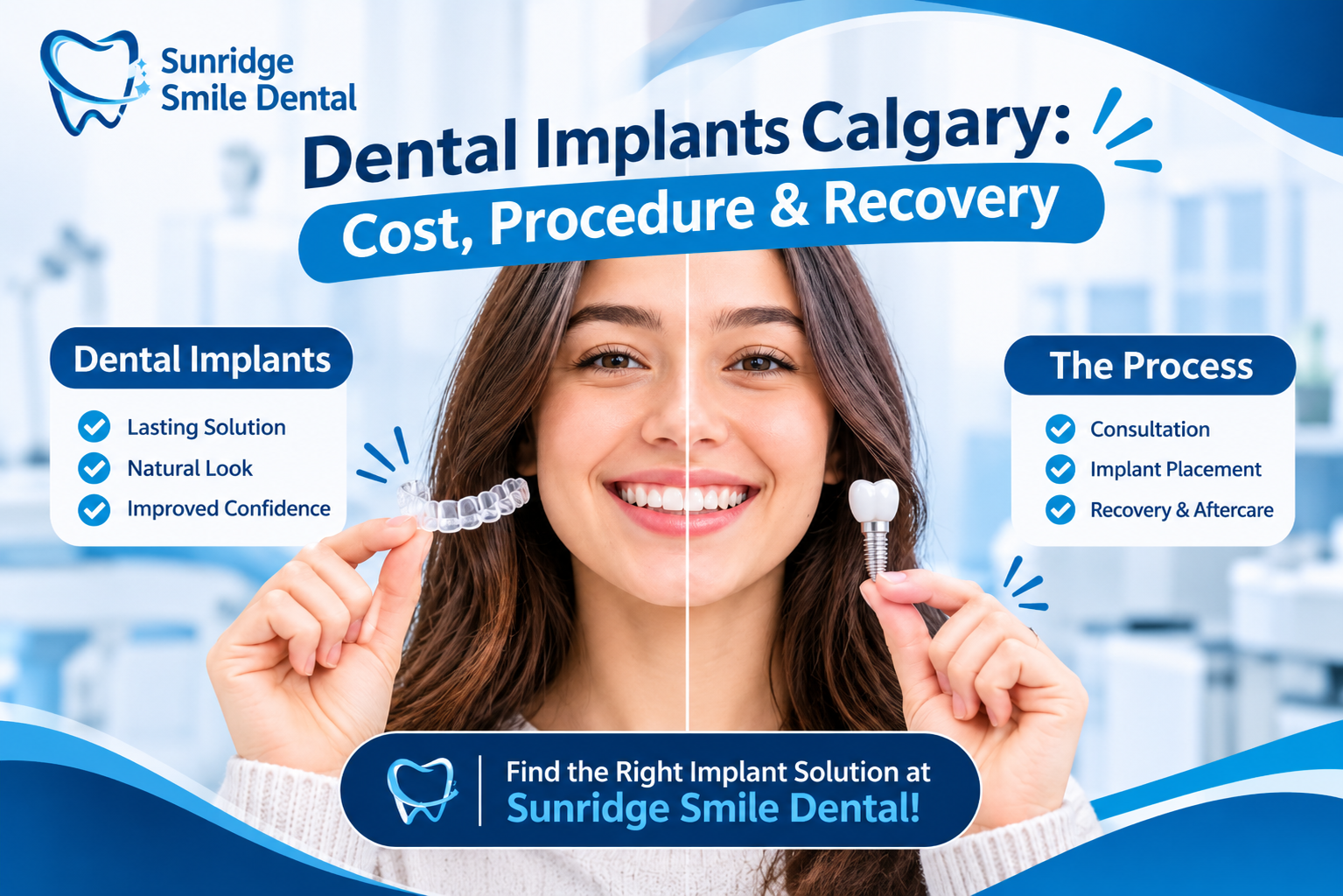
Choosing between Invisalign and traditional braces can be challenging when you want a straighter, healthier, and more confident smile. Understanding the difference between braces and invisalign can help you make an informed decision about your orthodontic treatment. Both options are designed to correct crooked teeth, close gaps, and improve bite alignment, but they differ in appearance, comfort, convenience, cost, and treatment duration.
Traditional braces use metal or ceramic brackets and wires to gradually move teeth into their desired positions. Invisalign, on the other hand, uses a series of clear, removable aligners that fit over your teeth and gently guide them into alignment.
But when comparing Invisalign vs. traditional braces, which option is better for you?
The answer depends on your dental condition, lifestyle, treatment goals, and personal preferences. At Sunridge Smile Dental, we understand that every smile is unique. Our team helps patients explore suitable orthodontic solutions based on their individual needs.
In this guide, we will compare Invisalign and traditional braces, explain their benefits and disadvantages, and help you understand which treatment may be the right choice for your smile.
What Is Invisalign and How Does It Work?
Invisalign is a modern orthodontic treatment that uses clear, custom-made plastic aligners to straighten teeth gradually.
Instead of using brackets and wires, Invisalign works through a series of removable trays. Each aligner is designed to apply gentle pressure to specific teeth, gradually moving them according to a personalized treatment plan.
Patients typically change their aligners every one to two weeks, following their dentist’s instructions.
At Sunridge Smile Dental’s Invisalign treatment clinic in Calgary, patients can explore clear aligner treatment and learn whether it is suitable for their orthodontic concerns.
Benefits of Invisalign
1. Nearly Invisible Appearance
One of the biggest advantages of Invisalign is its discreet appearance. The transparent aligners are less noticeable than traditional metal braces, making them a popular choice for adults and teenagers.
2. Removable and Convenient
You can remove Invisalign aligners when eating, drinking anything other than water, brushing, and flossing. This provides greater flexibility throughout your treatment.
3. Comfortable Design
Invisalign aligners have smooth plastic surfaces without metal brackets or wires. They generally cause less irritation to the cheeks and gums, although temporary pressure is normal when changing aligners.
4. Easier Oral Hygiene
Since the aligners are removable, you can brush and floss your teeth normally. You must also clean your aligners regularly to maintain good oral hygiene.
5. Fewer Food Restrictions
You can enjoy your favourite foods without worrying about damaging brackets or wires. Simply remove your aligners before meals and clean your teeth before putting them back.
Learn more about clear aligner treatment from the American Association of Orthodontists.
What Are Traditional Braces and How Do They Work?
Traditional braces are fixed orthodontic appliances that use brackets, wires, and sometimes elastic bands to gradually move teeth into better alignment.
Small brackets are attached to your teeth, and an orthodontic wire connects them. Your dental professional periodically adjusts the appliance to guide your teeth into their planned positions.
Traditional braces have been used successfully for many years and remain an effective option for treating different orthodontic concerns.
At Sunridge Smile Dental’s orthodontic treatment centre, patients can learn about available orthodontic solutions for improving tooth alignment and bite function.
Benefits of Traditional Braces
1. Effective for Complex Cases
Traditional braces can treat a wide range of orthodontic conditions, including significant crowding, spacing, and complicated bite problems.
2. Continuous Treatment
Since braces remain attached to your teeth, you do not need to remember to put them back after eating or drinking.
3. Precise Tooth Movement
Brackets and wires allow dental professionals to control different types of tooth movements throughout treatment.
4. Suitable for Different Age Groups
Children, teenagers, and adults may benefit from traditional braces depending on their dental health and orthodontic needs.
5. Different Styles Available
Patients may have the option of choosing traditional metal braces or ceramic braces, which use tooth-coloured brackets for a less noticeable appearance.
For more information, explore the American Association of Orthodontists’ guide to braces.
Invisalign vs Braces: What Are the Main Differences?
When comparing braces vs aligners, it is important to understand how both treatments affect your everyday life.
Here is a quick comparison:
| Features | Invisalign | Traditional Braces |
|---|---|---|
| Appearance | Nearly invisible | Visible brackets and wires |
| Comfort | Smooth plastic aligners | May irritate cheeks and lips |
| Removability | Removable | Fixed to teeth |
| Eating | Remove before meals | Some food restrictions |
| Cleaning | Easier brushing and flossing | Requires additional cleaning |
| Maintenance | Clean aligners regularly | Maintain brackets and wires |
| Treatment duration | Varies by case | Varies by case |
| Complex cases | Suitable for selected cases | Treats a wider range of cases |
Both options can deliver excellent results when treatment is properly planned and monitored. However, the best choice depends on your individual dental condition.
6 Important Factors to Consider When Choosing Invisalign vs Braces
1. Appearance: Which Treatment Looks Better?
Appearance is one of the biggest reasons patients choose Invisalign.
Clear aligners are designed to fit closely over your teeth, making them difficult to notice during conversations, meetings, and social activities.
Traditional braces are more visible because of their metal brackets and wires. However, ceramic braces can provide a less noticeable alternative.
Winner: Invisalign for patients who prefer discreet treatment.
2. Comfort: Are Invisalign Better Than Braces?
Comfort is another important consideration when choosing orthodontic treatment.
Invisalign aligners have smooth edges that generally cause less irritation to your cheeks and gums. However, you may experience temporary pressure when switching to a new set.
Traditional braces can cause soreness after adjustments. Brackets and wires may also irritate the inside of your mouth.
Winner: Invisalign for many patients seeking a smoother orthodontic experience.
Remember that both treatments involve moving teeth gradually, so some temporary discomfort is normal.
3. Treatment Duration: Which Works Faster?
Many patients want to know whether Invisalign or traditional braces produce faster results.
The treatment duration depends on the severity of your dental concerns and how consistently you follow your treatment plan.
Invisalign treatment commonly takes around 6–18 months for many patients, while traditional braces often take approximately 12–24 months. These are general estimates, and individual cases may take shorter or longer.
Factors affecting treatment duration include:
- Severity of tooth crowding.
- Type of bite problem.
- Required tooth movements.
- Patient compliance.
- Regular dental appointments.
Invisalign is not automatically faster than braces. Your dentist can provide a more accurate estimate after evaluating your teeth.
4. Eating and Drinking: Which Is More Convenient?
Invisalign offers greater flexibility when it comes to eating.
You simply remove your aligners before meals and put them back after cleaning your teeth.
With traditional braces, certain foods should be avoided because they can damage brackets or wires.
These include:
- Popcorn.
- Hard candies.
- Sticky sweets.
- Chewing gum.
- Hard nuts.
- Very crunchy foods.
Winner: Invisalign for greater dietary flexibility.
5. Oral Hygiene: Which Is Easier to Maintain?
Maintaining good oral hygiene is essential throughout orthodontic treatment.
With Invisalign, you can remove the aligners and brush and floss your teeth normally.
With traditional braces, food particles can become trapped around brackets and wires, requiring additional cleaning.
Interdental brushes, orthodontic flossing tools, and water flossers can help maintain good oral hygiene.
Winner: Invisalign for easier daily cleaning.
6. Cost: Is Invisalign More Expensive Than Braces?
Cost is one of the most common questions patients ask before starting orthodontic treatment.
The total cost of Invisalign or traditional braces depends on several factors:
- Complexity of your dental condition.
- Expected treatment duration.
- Type of orthodontic appliance.
- Number of appointments required.
- Dental insurance coverage.
- Additional procedures, if necessary.
Invisalign may cost more than traditional metal braces in some cases, but prices vary between clinics and individual treatment plans.
At Sunridge Smile Dental, patients can discuss treatment costs and available payment options before making a decision.
You can also explore our flexible dental financing options to learn more about managing your dental treatment expenses.
Are Invisalign Better Than Braces for Adults?
Many adults want straighter teeth but hesitate to choose traditional braces because of their appearance.
Invisalign provides a discreet alternative that can fit comfortably into professional and social lifestyles.
It is particularly appealing to adults who want:
- A nearly invisible orthodontic solution.
- Greater flexibility when eating.
- Easier brushing and flossing.
- A removable treatment option.
However, adults with complicated orthodontic conditions may benefit more from traditional braces.
Age alone does not determine the best treatment. Your dental health, bite alignment, and treatment goals are more important considerations.
Is Invisalign Better Than Braces for Teenagers?
Both Invisalign and traditional braces can be suitable for teenagers.
Invisalign offers a discreet appearance and removable convenience. However, teenagers must be responsible enough to wear their aligners for approximately 20–22 hours daily, or as directed by their dentist.
Traditional braces may be a better option for teenagers who might forget to wear removable aligners or require more complex tooth movements.
A professional dental assessment can help determine which treatment is appropriate.
How Do You Choose the Right Orthodontic Treatment?
Choosing between Invisalign and traditional braces should involve a professional dental evaluation.
During your consultation, your dental professional may assess:
- Your tooth alignment and crowding.
- Bite problems, including overbite and underbite.
- Gum health and overall dental condition.
- Expected treatment duration.
- Lifestyle and personal preferences.
- Treatment costs and available payment options.
At Sunridge Smile Dental, our team is committed to providing patient-focused dental care and helping patients understand their treatment options.
If you are unsure which treatment is right for you, consider scheduling a dental consultation in Calgary to discuss your smile goals.
Frequently Asked Questions
1. Is Invisalign more effective than traditional braces?
Invisalign is effective for many mild to moderate orthodontic concerns. Traditional braces can treat a wider range of complex alignment and bite problems. Effectiveness depends on your individual dental condition.
2. Are Invisalign better than braces for teenagers?
Invisalign can be suitable for responsible teenagers who consistently wear their aligners. Traditional braces may be preferable when compliance is a concern or more complex tooth movements are needed.
3. Do Invisalign aligners hurt?
Invisalign may cause temporary pressure or soreness, especially when starting a new set of aligners. This usually improves as your teeth adjust.
4. Can braces fix problems that Invisalign cannot?
Traditional braces can address certain complex orthodontic problems that may be difficult to manage with clear aligners alone. Your dentist can evaluate which treatment is most appropriate.
5. Can I switch from braces to Invisalign?
In some situations, patients can transition from traditional braces to Invisalign. However, this depends on treatment progress, remaining tooth movements, and clinical suitability.
6. Do I need retainers after Invisalign or braces?
Yes. Retainers are generally recommended after both treatments to help maintain your new tooth positions and prevent unwanted shifting.
Conclusion: Find the Right Smile Solution at Sunridge Smile Dental
When comparing Invisalign vs. traditional braces, both treatments offer valuable benefits for achieving a straighter and healthier smile.
Invisalign is an excellent option for suitable patients who prefer discreet, removable aligners and greater flexibility. Traditional braces remain a reliable solution for treating a wider range of orthodontic conditions, including more complex cases.
Ultimately, the right treatment depends on your dental condition, lifestyle, personal preferences, and smile goals.
At Sunridge Smile Dental, we are committed to helping patients in Sunridge and Northeast Calgary explore suitable orthodontic solutions with personalized care.
Whether you are considering Invisalign or traditional braces, our dental team can assess your smile, discuss your options, and help you take the next step.
Ready to Transform Your Smile?
Your journey toward a straighter, healthier smile starts with a consultation.
Visit Sunridge Smile Dental to discuss your orthodontic needs and discover whether Invisalign or traditional braces is right for you.
Book your appointment today!
Sunridge Smile Dental
Address: #102, 3393 26 Ave NE, Calgary, AB T1Y 6L4
Phone: (403) 999-9233
Website: https://sunridgesmiledental.ca/
Contact Sunridge Smile Dental and Request Your Appointment
Take the first step toward a healthier, more confident smile!