
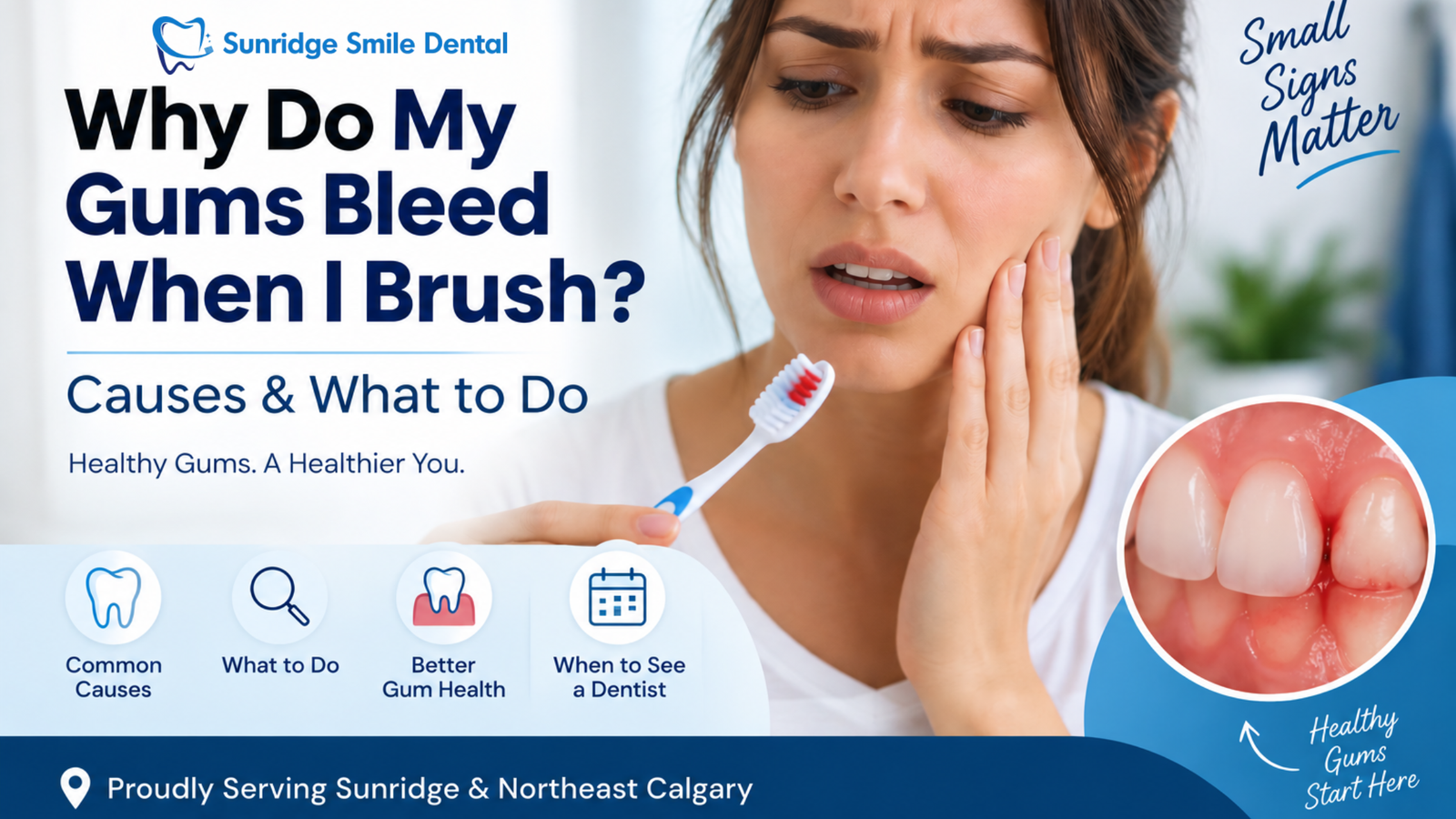
Seeing blood on your toothbrush can be unsettling, especially when your gums do not hurt. If you have noticed bleeding gums when brushing, it is worth paying attention to rather than simply assuming you brushed too hard.
Bleeding gums are often associated with plaque buildup and gingivitis, an early form of gum disease. However, brushing technique, flossing habits, hormonal changes, medications, and other factors can also contribute.
If you are experiencing bleeding gums in Sunridge or Northeast Calgary, understanding the possible cause is an important first step toward maintaining healthier gums.
Why do gums bleed when brushing? Gums commonly bleed when brushing because they are inflamed or irritated, often due to plaque buildup along the gumline. This can be an early sign of gingivitis. Persistent or frequent gum bleeding should be evaluated by a dental professional.
Common Causes of Bleeding Gums
There are several possible bleeding gums causes. While plaque-related inflammation is common, the reason can vary from person to person.
1. Gingivitis
One of the most common reasons gums bleed is gingivitis. It develops when plaque, a sticky film of bacteria, accumulates around the teeth and irritates the gum tissue.
Signs of gingivitis may include:
- Red or swollen gums
- Bleeding during brushing or flossing
- Tender or irritated gums
- Persistent bad breath
- Changes in the appearance of the gumline
Early gum inflammation can often be improved with better oral hygiene and professional dental care. However, persistent symptoms should not be ignored.
2. Brushing Too Hard
More pressure does not necessarily mean cleaner teeth. Using a hard-bristled toothbrush or brushing aggressively can irritate the gums and contribute to bleeding.
Use a soft-bristled toothbrush and gentle pressure. Spend enough time cleaning along the gumline without scrubbing forcefully.
3. Flossing Infrequently
If you have recently started flossing after not cleaning between your teeth regularly, you may notice some bleeding. Plaque and inflammation can build up in areas your toothbrush cannot reach.
Daily cleaning between your teeth is an important part of maintaining gum health. If bleeding continues despite consistent and gentle oral care, talk with your dentist.
4. Tartar Buildup
Plaque that remains on the teeth can harden into tartar. Unlike plaque, tartar cannot be effectively removed with regular brushing at home.
Professional dental cleaning can remove hardened buildup and allow your dental team to assess the condition of your teeth and gums.
If it has been a while since your last examination, learn more about comprehensive dental exams and X-rays at Sunridge Smile Dental.
5. Hormonal Changes
Hormonal changes can make gum tissue more sensitive and prone to inflammation. Some people, for example, experience increased gum sensitivity during pregnancy.
If you notice significant changes in your gums during a period of hormonal change, mention them to your dentist.
6. Medications and Other Health Factors
Certain medications and health conditions can affect the mouth or make bleeding more noticeable. Your dentist should know about medications you take and any relevant changes in your general health.
Do not stop taking a prescribed medication because your gums are bleeding. Instead, discuss the concern with your dentist and healthcare provider.
What Should I Do If My Gums Bleed When Brushing?
If you occasionally notice a small amount of blood, there is no need to panic. Instead, focus on gentle and consistent oral care while paying attention to whether the problem continues.
Here are some practical steps you can take:
- Brush twice a day with fluoride toothpaste.
- Use a soft-bristled toothbrush and gentle pressure.
- Clean between your teeth daily using floss or an appropriate interdental cleaner.
- Pay attention to your gumline, where plaque commonly accumulates.
- Maintain regular dental examinations and cleanings.
- Speak with your dentist if the bleeding continues or becomes more frequent.
Remember: Healthy gums should not regularly bleed every time you brush or floss. Persistent bleeding is worth discussing with a dental professional, even if there is no pain.
When Should You See a Dentist About Bleeding Gums?
Bleeding gums can sometimes be caused by simple irritation, but frequent or persistent bleeding may indicate an underlying gum problem.
Consider scheduling a dental appointment if you experience:
- Gums that bleed almost every time you brush or floss
- Persistent gum redness or swelling
- Bad breath that does not improve with regular oral care
- Gums that appear to be pulling away from your teeth
- Loose teeth
- Persistent gum tenderness
- Unexplained oral bleeding
- Noticeable changes in your gums
An examination can help determine whether the bleeding is associated with plaque, gingivitis, tartar buildup, brushing technique, or another concern.
Concerned About Bleeding Gums?
Don’t wait for gum problems to become uncomfortable. Sunridge Smile Dental can assess your oral health and help you understand the next steps.
Call (403) 999-9233 Book a Dental ConsultationBleeding Gums in Sunridge and Northeast Calgary
If you are searching for help with bleeding gums in Sunridge, you do not necessarily need to wait until the problem becomes painful.
Sunridge Smile Dental provides dental care for patients in Sunridge, Rundle, Whitehorn, Vista Heights, Marlborough, Marlborough Park, Pineridge, Temple, Mayland Heights and Monterey Park, as well as surrounding Northeast Calgary communities.
Because gum bleeding can have different causes, an appropriate dental examination is important for understanding what may be happening and whether additional treatment or preventive care is needed.
Regular examinations can also help identify changes in your oral health before they become more difficult to manage. If you are due for an appointment, you can contact Sunridge Smile Dental to discuss your dental care needs.
Frequently Asked Questions About Bleeding Gums
Is it normal for gums to bleed when brushing?
Occasional bleeding can happen, particularly when you have recently started flossing or changed your oral hygiene routine. However, gums that bleed regularly when brushing or flossing should be evaluated by a dentist.
Does bleeding gums always mean gingivitis?
No. Gingivitis is a common cause of bleeding gums, but irritation from brushing, hormonal changes, medications, and other factors may also contribute. A dental examination can help identify the likely cause.
Should I stop brushing if my gums bleed?
Generally, you should not stop brushing because your gums bleed. Continue gentle brushing with a soft-bristled toothbrush and clean between your teeth appropriately. If the bleeding persists, arrange a dental assessment.
Can gingivitis be reversed?
Early gingivitis can often be improved with appropriate oral hygiene and professional dental care. Removing plaque and tartar and maintaining consistent home care can help support healthier gums.
How can I improve my gum health?
Brush twice daily with fluoride toothpaste, clean between your teeth every day, use gentle brushing pressure, maintain regular dental examinations, and seek professional care when you notice persistent bleeding or other changes.
Protect Your Gum Health
Bleeding gums are easy to dismiss because they may not hurt. But persistent bleeding can be a sign that your gums need attention.
Whether the cause is plaque buildup, gingivitis, tartar, brushing technique, or another factor, identifying the cause early can help you protect your gum health and maintain a healthier smile.
If you’re experiencing bleeding gums when brushing in Sunridge or Northeast Calgary, consider arranging a dental examination with Sunridge Smile Dental.
Take the Next Step for Healthier Gums
If your gums are bleeding regularly, let a dental professional help determine why.
Sunridge Smile Dental
3393 26 Ave NE #102, Calgary, AB T1Y 6L4
Call: (403) 999-9233