
Root Canal Treatment
in Calgary NE
Our Service
What is Root Canal?
Root canal is a treatment to relieve pain and to save a badly decayed, damaged or infectedtooth instead of removing it. Unfortunately, teeth care unable to heal themselves, and if the infected nerve/pulp remains untreated, it could eventually lead to abscess or possible tooth loss. Endodontic treatment can be a critical dental treatment to save your teeth. To confirm the diagnosis, the dentist will examine the troublesome tooth and take X-rays.
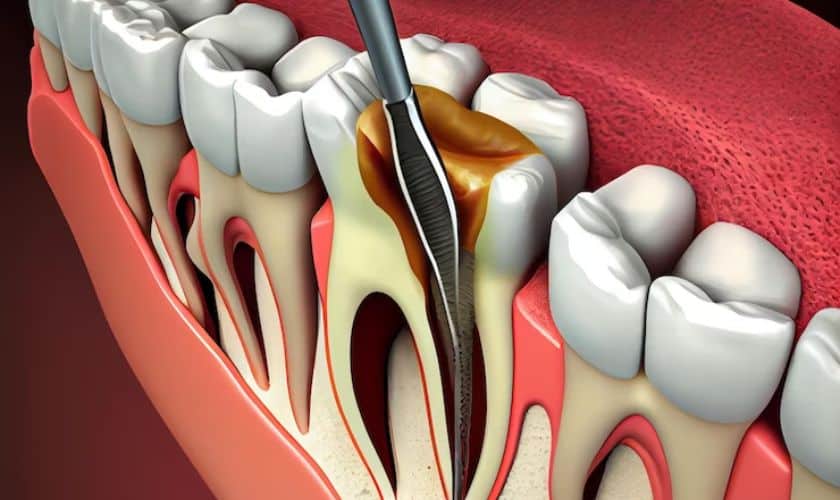
What is the Root Canal Procedure?
When one undergoes a dental root therapy, the inflamed or infected nerve/pulp is removed and the inside of the tooth is thoroughly cleaned and disinfected, then filled and sealed- the tooth remains but it’s no longer alive.
Root filling can usually be completed in one or two appointments, depending on the condition of your tooth and your personal circumstances. After healing has occurred, a crown or other restoration will be placed on the tooth in order to protect it and restore it to full function.
What are the symptoms that could indicate you might need a Root Canal?
- Severe pain, worsen at night
- Pimple/Bump on the gum
- A broken or cracked tooth
- Lingering sensitivity to hot or cold
- Swelling / Infection
- Darkening of tooth, indicating nerve is dying
Why Is It Important to Get a Root Canal Done?
Ignoring an infected tooth can lead to severe pain, swelling, and even tooth loss. A tooth pulp treatment removes the infected pulp, preventing the spread of infection and saving your natural tooth. Benefits of timely dental root treatment include:
- Pain relief and elimination of infection
- Preserving your natural tooth and avoiding extraction
- Preventing jawbone deterioration caused by tooth loss
- Restoring full functionality to your tooth.
Delaying treatment can result in serious oral health issues, including the need for more invasive procedures like tooth extractions and dental implants.
How Sunridge Smile Dental Helps in Root Canal Surgery?
At Sunridge Smile Dental, we specialize in providing endodontic treatment in NE Calgary with a focus on patient comfort and care. Our experienced root canal specialists in Calgary use advanced technology to ensure precise and painless treatment. Here’s how we help:
- Preventive Care – Regular check-ups, fluoride treatments, and dental sealants.
- Gentle Cleanings – Pain-free cleanings to remove plaque and bacteria.
- Cavity Protection – Early detection and minimally invasive fillings.
- Orthodontic Guidance – Monitoring teeth alignment and jaw development.
- Emergency Dental Care – Quick solutions for toothaches, injuries, and more.
If you’re experiencing tooth pain or need expert root canal treatment in NE Calgary, book an appointment with Sunridge Smile Dental today for specialized care!


Request
An Appointment
Root Canal Treatment
Frequently Asked Questions
What is a root canal treatment?
A root canal treatment is a procedure used to remove infected or damaged pulp (the soft tissue inside the tooth), clean and disinfect the root canals, and seal the tooth to prevent further infection. It helps save your natural tooth and eliminate pain.
When do I need a root canal?
You may need a root canal if you have:
- Persistent toothache
- Sensitivity to hot or cold that lingers
- Swollen or tender gums
- A cracked or chipped tooth
- A dental abscess or infection
- Deep tooth decay
Is a root canal painful?
Modern root canal treatment is performed under local anesthesia and is generally no more uncomfortable than getting a dental filling. Most patients experience relief from the pain caused by the infection.
How long does a root canal take?
Most root canal treatments can be completed in one or two appointments, depending on the complexity of the tooth and the severity of the infection.
What happens during a root canal procedure?
The dentist will:
- Numb the area with local anesthesia.
- Remove the infected pulp.
- Clean and disinfect the root canals.
- Fill and seal the canals.
- Restore the tooth with a filling or crown if needed.
Will I need a dental crown after a root canal?
In many cases, yes. Teeth that have undergone root canal treatment, especially molars, often require a crown to restore strength and protect them from fractures.
How successful is root canal treatment?
Root canal treatment has a success rate of over 90% when performed properly and followed by appropriate restoration and oral care.
Can a root canal save my tooth?
Yes. The primary goal of root canal treatment is to preserve your natural tooth, allowing you to continue chewing and speaking normally without the need for extraction.
What are the alternatives to a root canal?
The main alternative is tooth extraction. However, replacing an extracted tooth with a bridge, implant, or denture is usually more expensive and may require additional procedures.
What should I expect after the procedure?
You may experience mild tenderness or sensitivity for a few days. This is normal and can usually be managed with over-the-counter pain medication. Most patients return to normal activities the following day.
How long does a root canal-treated tooth last?
With proper oral hygiene, regular dental checkups, and a well-fitted restoration, a root canal-treated tooth can last for many years, often a lifetime.
Can I eat after a root canal?
Yes, but it’s best to wait until the numbness wears off. Avoid chewing on the treated tooth until the permanent restoration is placed.
What are the signs that I may need another root canal?
You should contact your dentist if you notice:
- Persistent pain
- Swelling around the treated tooth
- Gum pimples or drainage
- Sensitivity when biting
- A recurring infection
Are root canals safe?
Yes. Root canal treatment is a safe, evidence-based procedure that has been successfully performed for decades to eliminate infection and preserve natural teeth.
Can root canal treatment be done in one visit?
Many straightforward cases can be completed in a single visit. More complex cases or teeth with severe infection may require two or more appointments.
Is root canal treatment covered by insurance or dental benefits?
Many private dental insurance plans and the Canadian Dental Care Plan (CDCP), if eligible, may cover part of the cost of root canal treatment. Coverage depends on your specific plan and eligibility.
Can children need root canal treatment?
Yes. If a child’s tooth has deep decay or trauma affecting the pulp, a root canal or a similar pediatric pulp therapy may be recommended to preserve the tooth whenever possible.
How can I prevent needing a root canal?
You can reduce your risk by:
- Brushing twice daily with fluoride toothpaste
- Flossing every day
- Attending regular dental checkups and cleanings
- Treating cavities early
- Wearing a mouthguard during sports if needed
What happens if I delay root canal treatment?
Delaying treatment can allow the infection to spread, leading to increased pain, swelling, bone loss, abscess formation, and potentially the loss of the tooth.
When should I contact my dentist after a root canal?
Contact your dentist if you experience:
- Severe pain that lasts more than a few days
- Increasing swelling
- Fever
- An allergic reaction to medication
- A broken temporary filling or crown
- Difficulty biting after the procedure
These symptoms may require prompt evaluation and treatment.

Service Areas
Suburb We Serve
Sunridge Dentist
Rundle Dentist
Whitehorn Dentist
Marlborough Dentist
Taradale Dentist
Martindale Dentist
Saddletown Dentist
Savana Dentist