
DENTAL HEALTH • SUNRIDGE & NE CALGARY
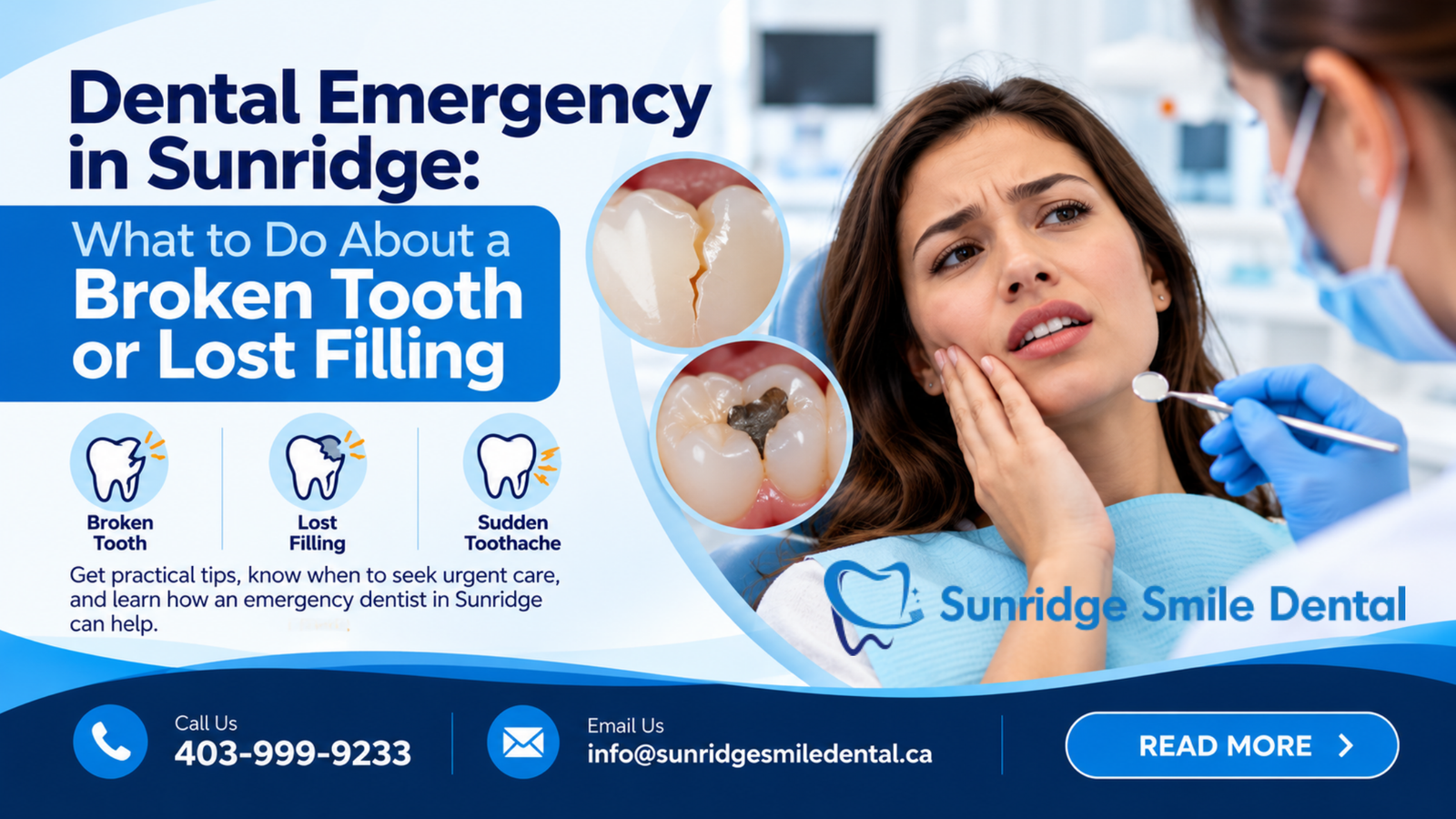
A broken tooth or filling that suddenly falls out can be painful and worrying. Learn how to protect the tooth, recognise warning signs, and decide when to contact an emergency dentist in Sunridge.
What should you do if a filling falls out?
If a filling falls out, gently rinse your mouth with warm water, keep the area clean, avoid chewing on that side, and contact a dentist promptly for an assessment. Do not use household glue or try to permanently repair the tooth yourself. If the tooth is painful, swollen, or very sensitive, tell the dental office when you call so they can help determine how urgently you need to be seen.
A dental problem rarely happens at a convenient time. You might bite into something crunchy and feel a piece of tooth break away, notice a filling in your food, or wake up with a sudden toothache. Even when the pain seems manageable, damage can leave the inner tooth vulnerable to further wear, sensitivity, or infection.
If you’re looking for an Emergency Dentist Sunridge patients can contact for advice, the first step is to stay calm and avoid making the damage worse. The right response depends on what happened and whether you have symptoms such as severe pain, swelling, bleeding, or an injury.
This guide explains what to do before your appointment, which symptoms need emergency medical attention, and what a dentist may recommend after examining a broken tooth or lost filling. It is general information, not a diagnosis; a dental professional needs to assess the tooth to determine the right treatment.
When is a dental emergency an emergency-room situation?
Some dental problems need urgent dental care, while certain symptoms can signal a medical emergency. Call 911 or go to the nearest emergency department if you have difficulty breathing or swallowing, rapidly increasing swelling that may affect your airway, major facial or jaw trauma, or bleeding that will not stop. Do not wait for a routine dental appointment in these situations.
Contact a dentist urgently for severe or persistent tooth pain, a cracked or broken tooth with pain, a knocked-out permanent tooth, swelling around a tooth or gum, pus or a bad taste that may indicate infection, or a restoration that has fallen out and leaves the tooth painful or exposed. When in doubt, call and describe your symptoms.
What to do if you break or chip a tooth
A tooth can chip or fracture after a fall, sports injury, biting something hard, or because decay or a large old filling has weakened it. A tiny chip may feel different from a deep fracture, but the size of the visible break does not always show how much damage lies underneath.
- Rinse gently. Use lukewarm water to clear loose debris. Avoid very hot or cold water if the tooth is sensitive.
- Save any fragment. Place a broken piece in a clean container and bring it to the appointment. Do not scrub it.
- Protect your mouth. If an edge is sharp, cover it temporarily with orthodontic wax from a pharmacy if available. Do not cut or file the tooth yourself.
- Use a cold compress. For swelling, apply a cold pack wrapped in a cloth to the outside of your cheek for short intervals.
- Avoid pressure. Eat soft foods and chew on the other side. Avoid hard, sticky, very hot, or very cold foods and drinks.
- Call a dentist. Explain when the break happened, whether you have pain or sensitivity, and whether the tooth feels loose.
Do not put aspirin directly on a tooth or gum, and do not use household adhesives. These can injure soft tissue or complicate professional repair. Pain relief may be an option for some people, but use only medication that is safe for you and follow its label; ask a pharmacist or clinician if you are unsure.
What to do when a filling falls out
A lost filling can leave a hollow or rough area in the tooth. You may feel a sharp edge with your tongue, notice food collecting in the space, or experience sensitivity to air, sweets, or temperature. Sometimes a filling comes out without pain, but that does not mean the tooth is protected.
Your immediate checklist
- Gently rinse with warm water.
- Keep the area clean and brush carefully around it.
- Avoid chewing on the affected side.
- Choose soft foods; avoid sticky or hard items.
- Call a dental office promptly and describe pain or sensitivity.
- Do not push objects into the cavity or use glue to attach the old filling.
If the opening is sensitive, a pharmacist may be able to advise whether a temporary dental repair product is appropriate until you can be seen. Follow the product instructions exactly and do not use it as a substitute for professional treatment. Never place it over swelling or signs of infection, and do not delay care because the tooth feels temporarily better.
For information about restorative care, see our dental filling service. A dentist can assess whether the tooth needs a new filling, a larger restoration, a crown, or another treatment depending on the remaining tooth structure and the cause of the filling loss.
Is a broken filling different from a lost filling?
Yes, although both need assessment. A broken filling may be cracked, loose, worn down, or missing only a portion. You might feel a rough surface or notice a new gap between the restoration and tooth. A lost filling has come out entirely, leaving more of the prepared tooth exposed.
Do not try to wiggle a loose filling or pull out a fragment that is still attached. Avoid chewing hard foods on that side and arrange a dental assessment. If the tooth has sharp edges, pain when biting, lingering temperature sensitivity, or swelling, tell the office when you call.
What if you have a sudden toothache?
A sudden toothache can be caused by decay, a cracked tooth, a damaged filling, gum inflammation, food trapped between teeth, or an infection. Pain alone cannot reliably identify the cause. A tooth that hurts when you bite may need a different assessment from one that throbs spontaneously or reacts strongly to hot and cold.
While you arrange dental care
- Rinse gently with warm water.
- Use floss carefully if you suspect food is trapped; do not force anything into the gum.
- Apply a cold compress to the cheek if there is swelling.
- Choose soft foods and avoid chewing on the painful side.
- Do not place aspirin, alcohol, or undiluted essential oils directly on the tooth or gum.
- Call a dentist promptly, especially if pain is severe, persistent, or accompanied by swelling or fever.
Do not start leftover antibiotics or someone else’s medication. Dental pain may need treatment of the underlying cause, and medication decisions should be made by a qualified clinician. If swelling is spreading or you feel seriously unwell, seek urgent medical help.
Signs you should not ignore
Seek urgent dental advice if you notice any of the following:
- Severe, worsening, or persistent toothache
- A broken tooth with a visible crack, pain, or sensitivity
- A filling or crown that has come loose, particularly with pain
- Swelling in the gum, cheek, or jaw
- Pus, a persistent bad taste, or a pimple-like bump on the gum
- Fever alongside dental pain or swelling
- A tooth knocked out, displaced, or loosened after an injury
Facial swelling with difficulty breathing or swallowing, severe facial trauma, or uncontrolled bleeding needs emergency medical attention. For a knocked-out permanent tooth, time matters: hold it by the crown, not the root; if dirty, rinse it gently without scrubbing; and seek immediate dental care. If you cannot safely place it back in its socket, keep it moist in milk or a tooth-preservation solution and get help immediately. Do not reinsert a baby tooth.
What happens at an emergency dental appointment?
Your dentist will ask what happened, when symptoms began, and whether you have medical conditions or take medications that may affect care. They may examine the tooth and surrounding gums and recommend dental X-rays if needed to assess damage, decay, or infection.
The first goal is to identify the problem, relieve discomfort where possible, and protect the tooth. Depending on the findings, treatment may include smoothing a minor sharp edge, placing a temporary or permanent filling, repairing a fracture, recommending a crown, or discussing root canal treatment if the inner pulp is damaged. Some injuries need follow-up because symptoms and tooth vitality can change over time.
Not every emergency can be fully treated in one visit. The dentist will explain the findings, options, expected next steps, and costs before proceeding whenever circumstances allow. Learn more about emergency dentistry at Sunridge Smile Dental.
How quickly should you book an urgent dental appointment?
Call as soon as you notice a broken tooth, lost filling, or unexplained tooth pain. The office can ask about your symptoms and advise how quickly you should be assessed. A painless lost filling may be less urgent than a painful fracture, but both should be checked rather than left until the next routine cleaning.
When calling, be ready to share:
- What happened and approximately when
- Whether you have pain, sensitivity, swelling, bleeding, or fever
- Whether a tooth or filling fragment is available
- Relevant medical conditions, allergies, medications, or recent dental treatment
Sunridge Smile Dental lists emergency dentistry and same-day emergency walk-in availability on its website. Availability can vary, so call first to discuss your symptoms and confirm the next step rather than assuming a particular appointment time is open.
Emergency dental care in Sunridge and NE Calgary
If you live or work in Sunridge, Rundle, Whitehorn, Marlborough, Falconridge, Castleridge, or Abbeydale, a sudden dental problem can disrupt your day quickly. Sunridge Smile Dental is located at #102, 3393 26 Ave NE, Calgary, AB T1Y 6L4. If you have a broken tooth, lost filling, or sudden toothache, contact the clinic to explain what has happened and ask about an urgent appointment.
Calling ahead helps the team understand your symptoms and provide instructions for getting to the clinic safely. If you have symptoms that may threaten your airway or indicate serious facial trauma, go to emergency medical care instead of waiting for a dental appointment.
How to reduce the risk of another dental emergency
You cannot prevent every accident, but a few habits may lower the risk of preventable damage:
- Keep up with dental exams so a dentist can identify decay, cracks, and worn restorations.
- Brush twice daily with fluoride toothpaste and clean between your teeth every day.
- Avoid chewing ice, hard candy, pen caps, or other hard objects.
- Wear a properly fitted mouthguard for contact sports.
- Ask your dentist about a night guard if you grind or clench your teeth.
- Have a filling or crown checked if it feels loose, rough, or different when you bite.
- Do not ignore sensitivity or recurring pain just because it comes and goes.
Regular checkups and appropriate treatment can help identify problems before they become more complicated. For a broader assessment, explore our comprehensive dental exams and X-rays.
Need an emergency dentist in Sunridge?
A broken tooth or lost filling can feel alarming, but taking a few careful steps can help protect your mouth while you arrange professional care. Rinse gently, avoid chewing on the affected side, keep any broken pieces, and call a dentist promptly. Do not attempt a permanent home repair.
If you’re experiencing a dental problem in Sunridge or NE Calgary, contact Sunridge Smile Dental to discuss your symptoms and appointment options.
HERE WHEN YOU NEED DENTAL CARE
Need help with a broken tooth or lost filling?
Call our team to explain your symptoms and ask about an urgent dental appointment.
#102, 3393 26 Ave NE, Calgary, AB T1Y 6L4
Frequently asked questions
What should you do if a filling falls out?
Rinse gently with warm water, keep the area clean, avoid chewing on that side, and contact a dentist promptly. Do not use glue or try to permanently repair the tooth at home.
Is a lost filling a dental emergency?
It needs prompt dental assessment because the exposed tooth may be sensitive or vulnerable to further damage. Severe pain, swelling, fever, or signs of infection make it more urgent.
Can I eat if my filling has fallen out?
Choose soft foods and chew on the opposite side. Avoid hard, sticky, very hot, or very cold foods if the tooth is sensitive, and arrange a dental appointment.
What should I do if I break a tooth?
Rinse with lukewarm water, save any fragment, use a cold compress for swelling, avoid chewing on the tooth, and call a dentist. Seek urgent care for pain, significant damage, or injury.
Should I go to the ER for a toothache?
Contact a dentist for most toothaches. Go to emergency medical care or call 911 if you have difficulty breathing or swallowing, rapidly spreading swelling that affects the airway, major facial trauma, or bleeding that will not stop.
Can Sunridge Smile Dental see me the same day?
The clinic states that it offers same-day emergency walk-ins, but availability varies. Call 403-999-9233 to describe your symptoms and confirm the next step.
Where can I find an emergency dentist near Rundle or Whitehorn?
Sunridge Smile Dental is located at #102, 3393 26 Ave NE, Calgary, AB T1Y 6L4, and serves patients in Sunridge and nearby NE Calgary communities. Call ahead to discuss your symptoms and appointment options.
Important: This article is for general education and does not replace an examination or personalised medical advice. For severe symptoms or a possible medical emergency, seek urgent medical attention.